

In addition to the potato chips, the chip bag does not contain air, but nitrogen. This gas protects the freshness and aroma of the snacks on the supermarket shelf. Modified atmosphere has become indispensable in the packaging of many food products.
Real land of milk and honey
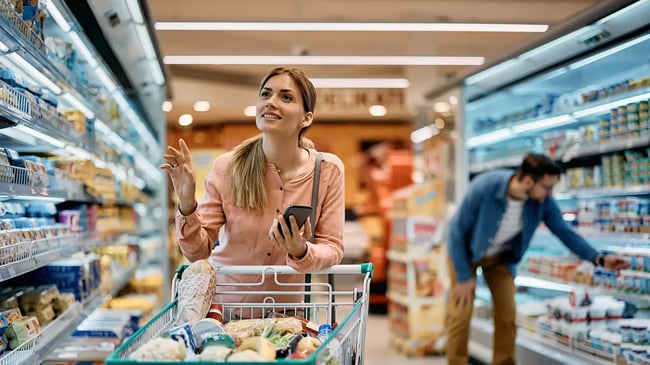
The word "land of milk and honey" first appeared in the Middle Ages. In those days, people thought of this term primarily in terms of food, which was always in short supply. The famous painting by Pieter Brueghel the Elder shows this very impressively. If the Flemish Renaissance painter had found himself in a modern supermarket, he would probably have felt like he was in the land of milk and honey: food in every conceivable form and in boundless abundance.
For us today, this abundance - plus cash register - is a matter of course. Modern agriculture and food technology provide us with an almost infinite variety of edible products. Motorized means of transport and uninterrupted cold chains transport them to every corner of the globe. Gases play an increasingly important role in the journey from processing to the plate. Today, many foods are packaged in a modified atmosphere (Modified Atmosphere Packaging, MAP). This often plays a decisive role in ensuring that products reach consumers in an appetizing and high-quality condition.
"If the packaging also contains a gas cushion in addition to the product, it can be assumed that this is not air, but a selected gas or gas mixture," explains Johanna Schirmacher, who is responsible for food applications at Messer. "These are almost always at least one of three gases that we constantly breathe in as natural components of the air: nitrogen, oxygen and carbon dioxide."
Nitrogen prevents oxidation
Nitrogen (N2) makes up 78 percent of the Earth's atmosphere. It is odorless and tasteless, hardly dissolves in water and is practically inert, i.e. it is very slow to react. This means that this gas forms virtually no chemical compounds with food components.
Its most important function in packaging is to displace atmospheric oxygen. Oxidation alters important ingredients in many foods, resulting in a loss of quality. Products containing oil and fat become rancid and inedible, although they actually have a very long shelf life by nature.
This applies, for example, to cooking oil, nuts and potato chips. Bags containing oily products are filled and sealed in a nitrogen atmosphere. A welcome side effect is the dryness of the gas. Unlike air, it contains practically no moisture, so the potato chips not only retain their taste, but also stay crispy. Nitrogen is also used in the packaging of animal feed.

Carbon dioxide against microbes, oxygen for living cells
Carbon dioxide (CO2) is also very inert and, like nitrogen, can be used to protect against oxidation. As it dissolves easily in water and, therefore, also lowers the pH value, it also has a bacteriostatic effect: it inhibits the growth of microbes and molds. This even applies to anaerobic bacteria that can survive without oxygen.
As already mentioned, oxygen (O2) is undesirable in many foods. An excessively high concentration of oxygen leads to damage through oxidation and promotes the growth of aerobic microorganisms that rely on oxygen. However, there are products for which the gas is still required after packaging.
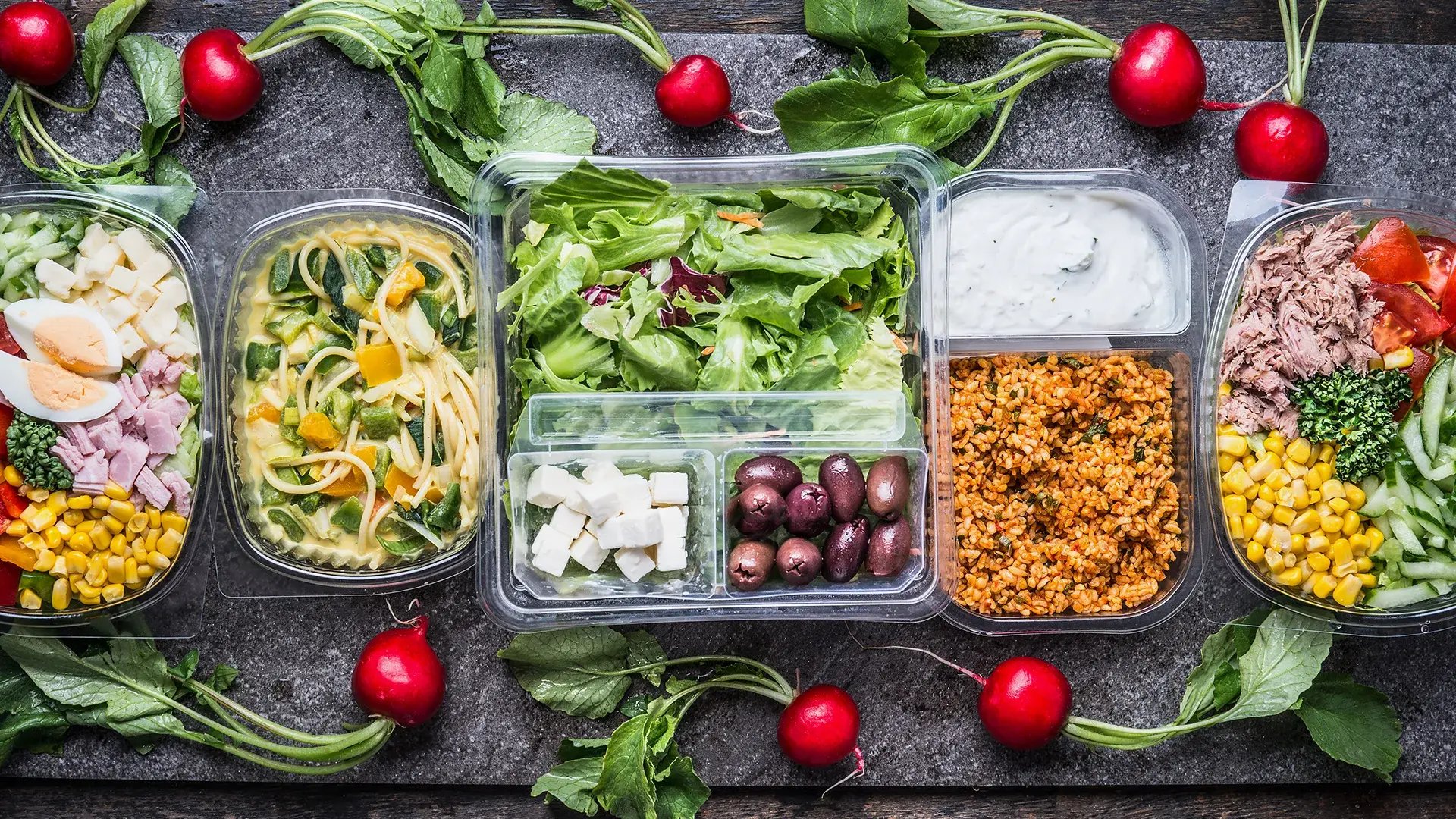
The metabolism of fresh fruit, salad and vegetables should not be completely interrupted after harvesting. Their living cells should be able to continue consuming oxygen to a certain extent. In an oxygen-free atmosphere, they would "suffocate" and the products would become limp and unattractive. "For such plant products, a proportion of oxygen is added to the modified atmosphere," explains Johanna Schirmacher.
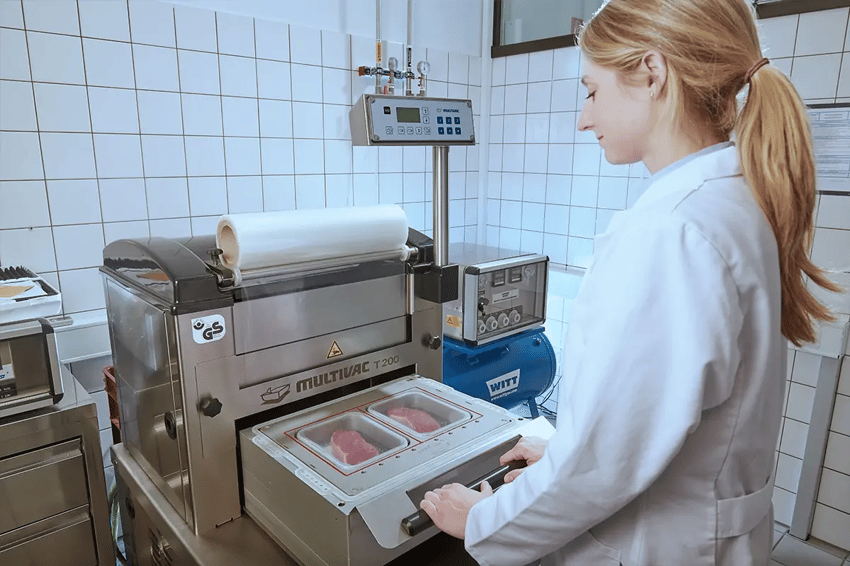
Oxygen also plays a role when fresh meat is packaged. Fresh meat contains myoglobin. In its oxidized form, oxymyoglobin, it is responsible for the red color of the meat. Without oxygen in the environment, this substance would lose its oxygen bond and thus its color. In packaged meat, therefore, adding oxygen ensures that the product retains its appetizing appearance. Manufacturers and retailers are, of course, obliged to comply with the quality standards regardless of the appearance of the meat and to only offer the goods within the specified consumption period.
The right mix
Of course, the supermarket land of milk and honey also includes (semi-)prepared dishes that can be eaten immediately or after briefly reheating. Carefully selected gas mixtures, tailored to the various ingredients of the convenience food, are used during packaging. "One such product is our Gourmet gas N70, which we offer as a ready-to-use mixture with 70 percent nitrogen and 30 percent carbon dioxide," explains Johanna Schirmacher. "The carbon dioxide develops its bacteriostatic effect in a sandwich pack, for example. To prevent too much of it from dissolving in the moisture content and the film from collapsing, the additional nitrogen serves as a supporting gas."
"We advise our customers in their search for the perfect gas composition," emphasizes Johanna Schirmacher. "In doing so, we can rely on experience we have gained over many years. However, each food product and the associated packaging system form a unique combination. That's why we also carry out joint practical trials and train employees in the correct handling of Messer's Gourmet gases." Incidentally, these gases are subject to strict food controls. They are completely safe for consumers as foodstuffs.
For more than 125 years, Messer, the today’s world's largest privately owned company for industrial gases, medical gases, specialty gases, and gases for electronics, committed to its guiding principles of safety, focus on customers and employees, responsibility for our society, sustainability, trust, and respect. Messer's Gases for Life and patented gas applications are essential for environmental protection, climate protection, decarbonization, and innovation.