

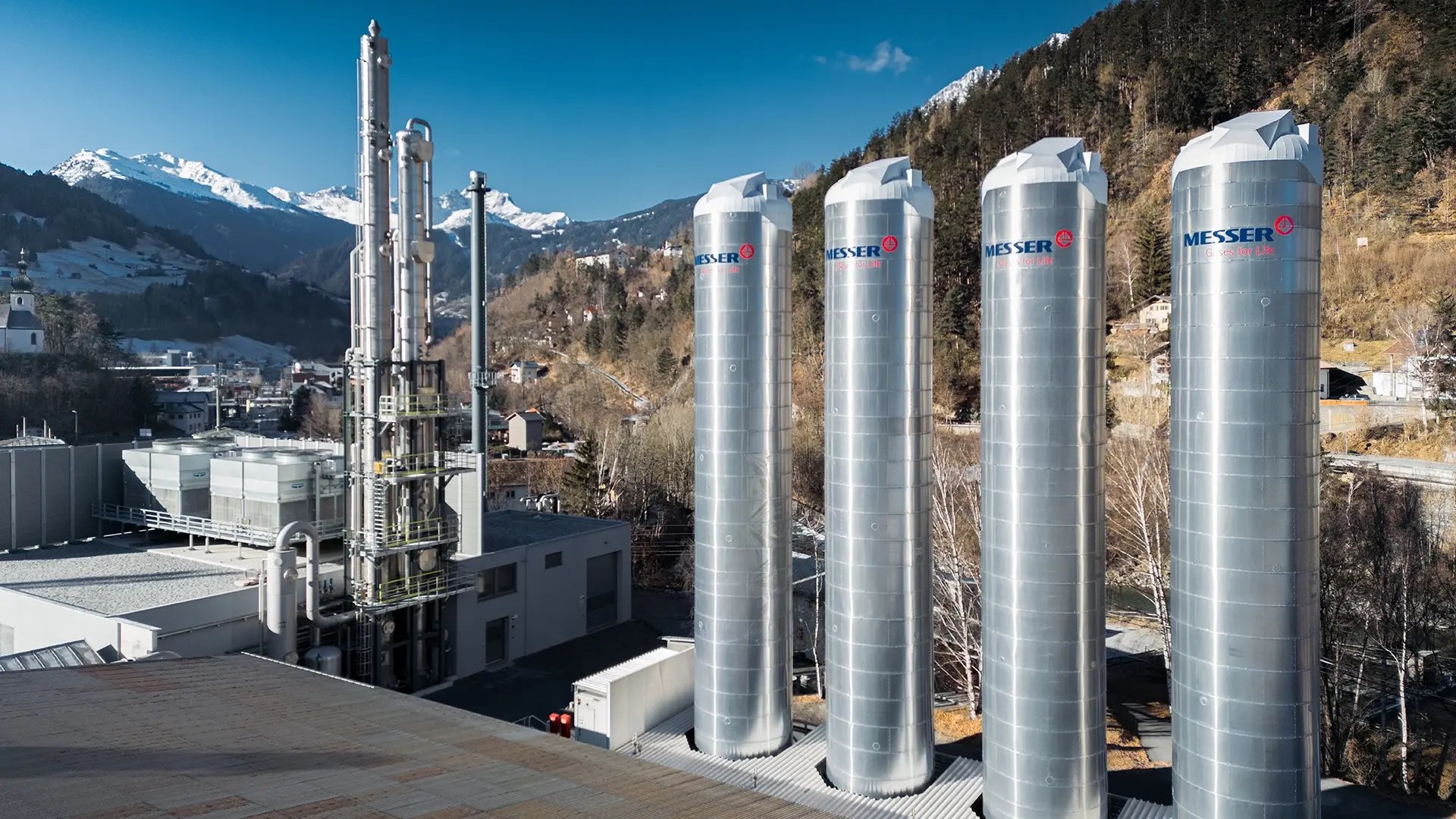
To combat climate change, global CO2 emissions must be reduced rapidly and significantly. The capture, utilization, and storage of carbon dioxide (CO2) from flue gas can make a decisive contribution toward achieving a zero-emissions scenario. Under the name “ZeCarb,” Messer offers Carbon Capture Utilization and Storage (CCUS) as a service.
The chicken-or-egg dilemma
Decarbonization faces an acute chicken-or-egg dilemma: For progress to move quickly, everything would have to be in place at the same time—sufficient green energy, available CO2 storage capacity, a well-developed CO2 transport infrastructure, and economically viable value chains. Of course, this can’t happen at the snap of a finger, and many elements of the transformation are still—to stick with the metaphor—in the “egg” stage.
Building and retrofitting these systems takes time. It is impossible to operate all steel and cement plants—or even the entire fossil-fuel-based power generation sector—completely without CO2 emissions. These industries are “hard-to-abate.” CCUS is an essential component to reduce the CO2 emissions of such facilities. The flue gas is captured at the stack, and the CO2 is separated from the other gas components in a dedicated facility. Mainly water vapor, oxygen, and nitrogen are released into the atmosphere. The captured CO2 is either repurposed for “secondary use” or permanently stored underground.
No successful transformation without CCUS
According to the International Renewable Energy Agency (IRENA), CCUS will need to account for about 20 percent of the necessary CO2 reductions by 2050. The first component of CCUS, carbon capture, has been available for decades. The separation of CO2 from industrial exhaust is a proven technology. Gas suppliers such as Messer use it to recover carbon dioxide for reuse, for example, in the beverage and food industries.
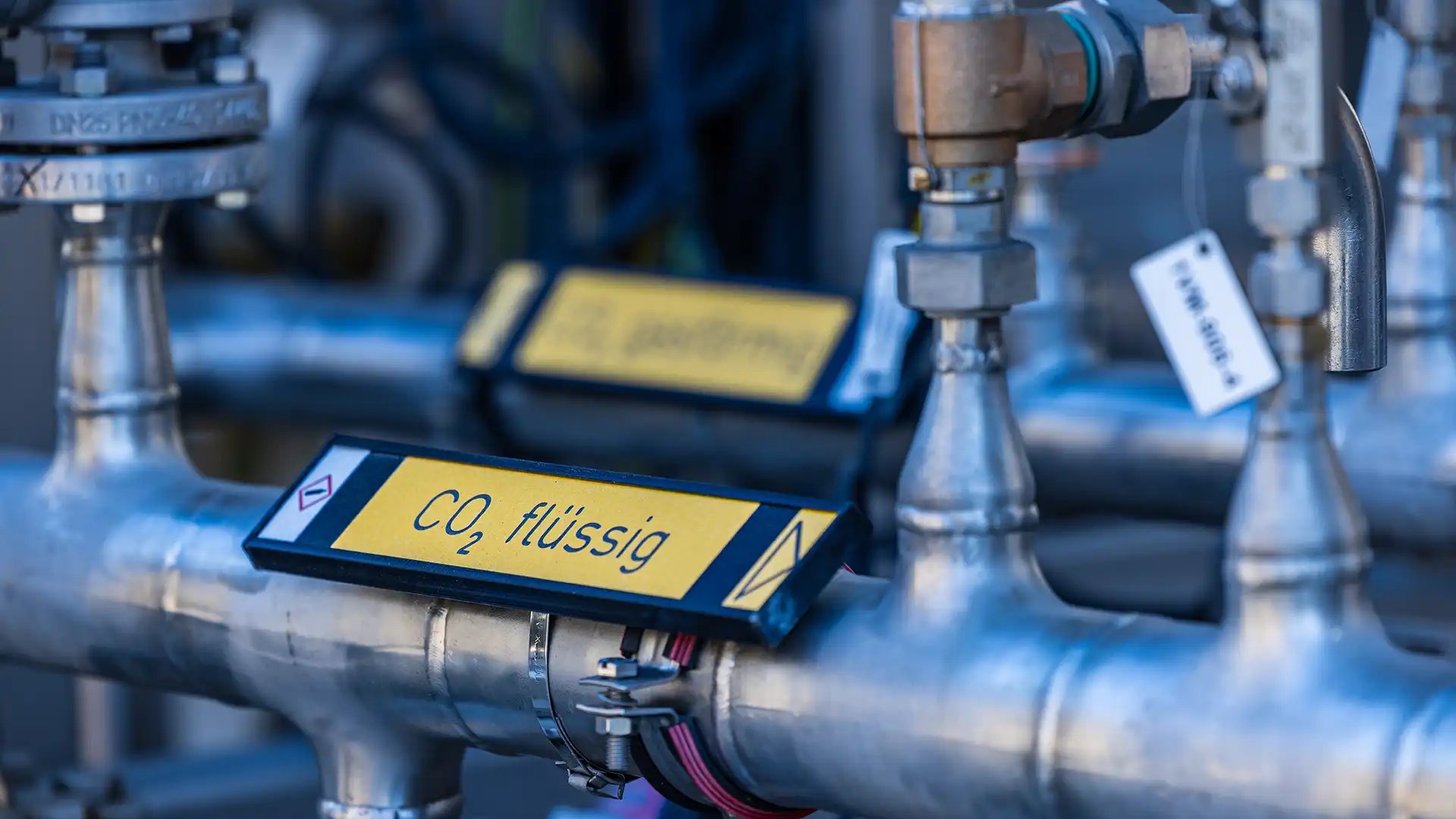
There are various methods for capturing carbon dioxide (CO2) from flue gas. On an industrial scale, amine scrubbing is the most proven method, capable of capturing several metric tons of CO2 per hour. It is highly efficient and particularly mature and reliable compared to other processes. The flue gas is passed through a basic amine solution, which binds the CO2. Heating the saturated solution then releases the carbon dioxide, which is subsequently captured again. The carbon dioxide is then compressed, dried, purified, and liquefied. It meets the strict quality requirements of storage site operators for permanent CO2 storage. If necessary, it can also be designated as CO2 for the food industry.
Engineering expertise and comprehensive services
Messer already operates more than 300 such CO2 recovery plants worldwide. They can be installed at sites where large furnaces—for example, in the steel, cement, and glass industries—emit corresponding amounts of flue gas. “We not only have the engineering expertise, but also the hardware and commissioning expertise,” explains Fabian Weber, Manager of Marketing & Communications CCUS at Messer.
Until now, Messer has captured the emitted CO2 for its own use and sold it as an industrial gas product, a service that will continue to be offered in the future. However, CCUS is not only about much larger scales but also, due to CO2 reduction mandates, a completely different utilization model, as Fabian Weber explains: “Companies must reduce their CO2 emissions because laws in most countries around the world require it and because emissions allowances are becoming increasingly expensive. They need carbon capture systems so they can meet their ‘net-zero’ targets and thus contribute to the EU’s 2030 climate goals.”
The key difference between Messer and other players in the market is that Messer offers CCUS as a one-stop service package. “We specialize in CO2 recovery from a wide variety of emission sources and install the appropriate system at the customer’s production site. We then take care not only of its operation but also the transport and subsequent reuse or storage of the gas.”
Messer provides comprehensive support to customers in planning, installation, operation, and handling the necessary bureaucracy, allowing them to focus entirely on their core business.
CO2 reduction through sustainable utilization
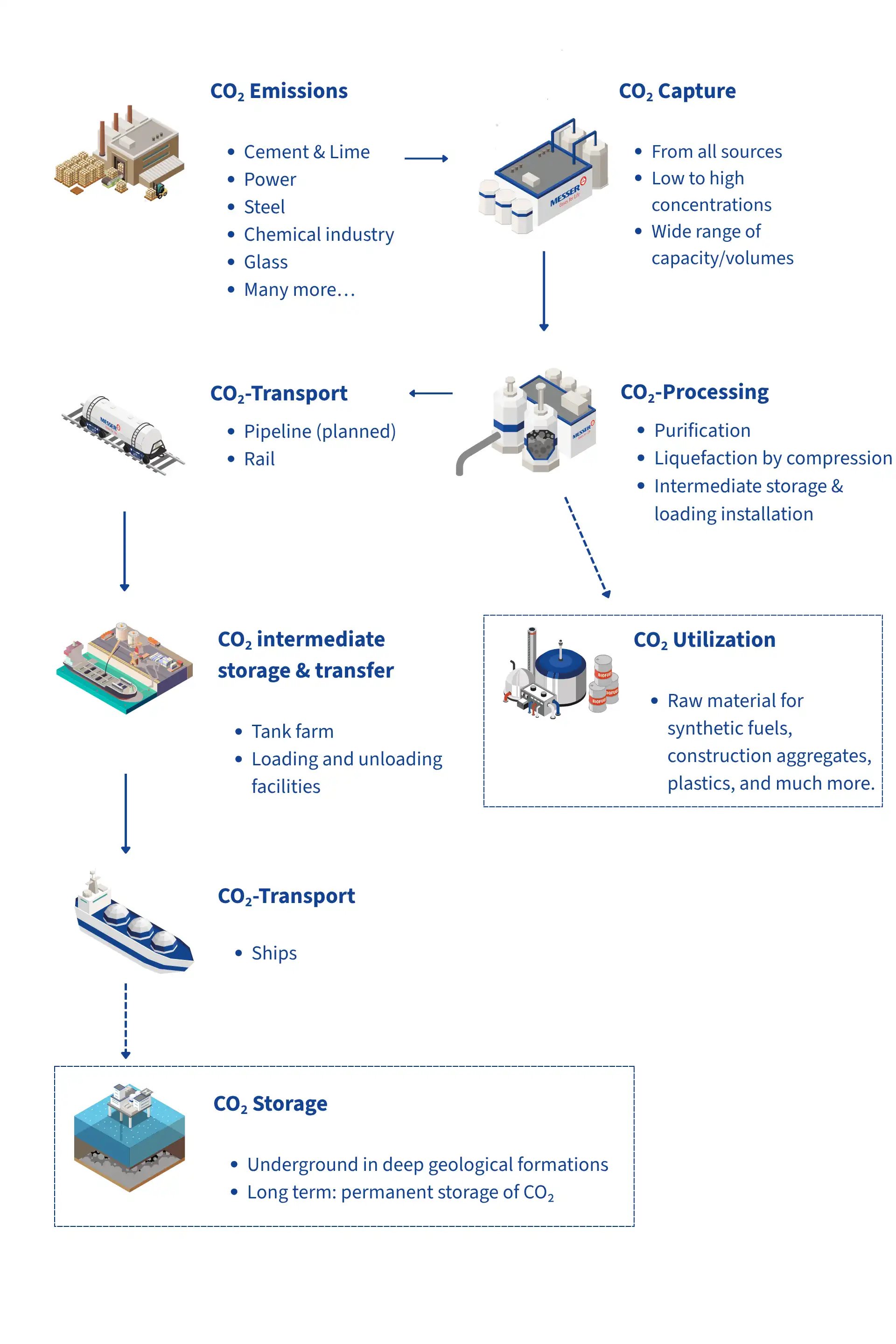
ZeCarb covers the entire value chain from the capture plant to “Utilization and Storage”. This includes the reuse or permanent storage of the gas. One option for “utilization” is the production of synthetic fuels. These e-fuels are produced using renewable energy from green hydrogen and captured carbon dioxide. They replace gasoline, diesel, or kerosene derived from petroleum. E-fuels can also help reduce the carbon footprint of sectors that are difficult or impossible to electrify, such as heavy-duty transportation, shipping, and aviation. The first flights using CCU kerosene took place as early as 2021.
Captured CO2 can also serve as a raw material for plastics, packaging, textiles, and pharmaceuticals. CCU-based products such as cleaning agents, polymers, and insulation materials are already on the market. In the construction sector, which is responsible for 25 percent of global CO2 emissions, CCU can also make an important contribution to climate protection. For example, CO2 can be permanently bound in building materials through mineralization as calcium carbonate. This CCU product is already being used to manufacture bricks, paving stones, and cement. At the same time, waste from the steel and construction industries is recycled.
Europe leads in CO2 storage
In addition to utilization, the permanent storage of captured CO2 is necessary to achieve the set CO2 reduction targets: Carbon Capture and Storage (CCS). Here, too, proven technology is available. Suitable geological formations are also present. CO2 is already being injected into oil and gas fields to increase the yield of fossil fuels, particularly in the United States. Using the same method, carbon dioxide can be stored in empty geological formations for permanent retention.
“Given the volume of CO2 emitted, CCS is indispensable,” explains Fabian Weber. “There are currently CCS projects in Europe with a planned storage capacity of over 90 million metric tons of CO2 by 2030, most of them in the North Sea. Special CO2 terminals are needed to load the CO2 onto tankers. Several port projects of this kind are under development, including ‘CarbonBridge’ in Bremen, Germany.”
Based on current knowledge, there is potential there to store many times the EU’s total annual emissions. However, as Fabian Weber confirms, the developed storage capacities are still far from sufficient, though there is a lot of activity in the market. There are currently around 600 CCS projects in early and advanced stages of development worldwide. Suitable geological formations and depleted oil or natural gas fields are being developed for storage, and large sums are being invested in expanding the infrastructure for the subsea injection of CO2.
For more than 125 years, Messer, the today’s world's largest privately owned company for industrial gases, medical gases, specialty gases, and gases for electronics, committed to its guiding principles of safety, focus on customers and employees, responsibility for our society, sustainability, trust, and respect. Messer's Gases for Life and patented gas applications are essential for environmental protection, climate protection, decarbonization, and innovation.